
Vesugen is a synthetic tripeptide bioregulator (Lys-Glu-Asp) designed to target the cardiovascular system by improving endothelial cell function and blood vessel health. It functions primarily at an epigenetic level to restore youthfulness, flexibility, and performance to damaged or aging vascular tissues.
Enhanced Microcirculation: Stimulates the repair and proliferation of endothelial cells, significantly improving overall blood flow and nutrient delivery to tissues.
Vascular Elasticity: Upregulates endothelial nitric oxide synthase (eNOS) to increase nitric oxide production, which relaxes blood vessels and reduces arterial stiffness.
Atherosclerosis Mitigation: Helps normalize elevated endothelin-1 levels, potentially slowing down vascular tissue degradation and plaque-related pathologies.
Cellular Anti-Aging: Mimics calorie restriction mechanisms by increasing SIRT1 expression, a protein vital for DNA repair and metabolic regulation.
Improved Cell Communication: Boosts connexin protein expression, strengthening the gap junctions that coordinate optimal blood pressure regulation.
Secondary Organ Support: Provides neuroprotective impacts on brain tissue and enhances skin fibroblasts, contributing to broader physical longevity.

Ipamorelin is a synthetic growth hormone secretagogue that stimulates the pituitary gland to release human growth hormone (HGH). It is highly regarded in functional medicine because it selectively triggers growth hormone pulses without significantly raising cortisol (the stress hormone), prolactin, or appetite.
Key Benefits
Improved Body Composition: It accelerates fat metabolism, specifically targeting stubborn abdominal fat, while actively preserving and building lean muscle mass.
Accelerated Tissue Recovery: By increasing systemic HGH and insulin-like growth factor 1 (IGF-1), it speeds up cellular replication to heal muscles, joints, tendons, and ligaments after intense training or injury.
Enhanced Sleep Quality: Users frequently report a substantial increase in deep, slow-wave sleep, which directly improves morning vitality and physical recovery.
It stimulates natural collagen production, leading to improved skin elasticity, fewer fine lines, and stronger hair and nails.
Increased Bone Density: The peptide supports bone remodeling and mineralization, which helps strengthen the skeletal system and mitigate age-related bone loss.
Unlike older generation peptides (like GHRP-2 or GHRP-6), Ipamorelin has a cleaner safety profile. It binds exclusively to the ghrelin receptor, meaning it avoids the negative hormonal spikes, jitteriness, or severe hunger pangs associated with other compounds. It is also frequently paired with CJC-1295 to create a synergistic effect that amplifies and extends the duration of the growth hormone release.

Thymosin Alpha 1 (Tα1) is a naturally occurring thymic peptide that acts as a master modulator of the immune system, balancing both innate and adaptive immune responses rather than blindly stimulating them.
Enhances T-Cell Maturation: Stimulates the production and differentiation of disease-fighting T-cells (CD4+ and CD8+) inside the thymus gland.
Suppresses Chronic Inflammation: Restores balance by promoting regulatory T-cells (Tregs) and decreasing pro-inflammatory cytokines.
Combats Viral Infections: Improves viral clearance in respiratory illnesses, acute COVID-19, and long COVID by restoring depleted cell counts.
Supports Cancer Immunotherapy: Works synergistically with chemotherapy and radiation by boosting tumor surveillance and reducing treatment-induced immunosuppression.
Regulates Autoimmune Responses: Helps restore immune tolerance in conditions like rheumatoid arthritis, systemic lupus erythematosus (SLE), and psoriatic arthritis.
Counteracts Immunosenescence: Fights the natural age-related decline of the thymus gland, helping older adults maintain healthier antibody responses.
Acts as a Vaccine Adjuvant: Strengthens the body’s antibody response to immunizations, providing more reliable, longer-lasting protection.
Provides Antioxidant Protection: Increases cellular glutathione production and directly neutralizes dangerous reactive oxygen species to protect tissues from oxidative damage.
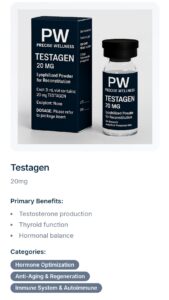
Unlike traditional testosterone replacement therapies (TRT) that inject synthetic hormones into the body, Testagen acts as a cellular signaling mechanism to encourage the body to normalize its own hormone production.
Testagen (KEDG) is a short synthetic bioregulatory peptide primarily studied for its ability to support male reproductive health, modulate gene expression, and naturally balance testosterone levels.
Key Health Benefits of TestagenSupports
Natural Testosterone Production: It targets and stimulates Leydig cell activity and bio-synthetic pathways within the testes, aiding natural hormone output.
Optimises the HPG Axis: It helps regulate communication across the hypothalamic–pituitary–gonadal (HPG) axis, balancing signals between the brain and reproductive organs.
Improves Sperm Quality and Fertility: Early research indicates that Testagen supports healthy spermatogenesis, leading to better cellular resilience and sperm markers.
Enhances Energy and Vitality: By regulating hormonal and age-related endocrine decline, users often experience improved mood, better sleep, and higher baseline vitality.
Preserves Lean Muscle Mass: Maintaining stable testosterone levels through proper cell signaling helps prevent the natural muscle wasting associated with aging.
Protects Prostate and Testicular Tissue: The peptide shows potential anti-inflammatory properties that guard male reproductive tissues against oxidative stress and premature cellular aging.
Scientific MechanismTestagen consists of a specific 4-amino acid sequence (Lys-Glu-Asp-Gly). It is highly bioavailable and capable of penetrating both cellular and nuclear membranes. Once inside, it binds directly to specific DNA and histone protein structures. This process—known as epigenetic modulation—reactivates dormant or degraded genes responsible for protein synthesis in the endocrine and reproductive systems.

Retatrutide is an experimental peptide medication that acts as a triple hormone receptor agonist. It targets three distinct metabolic pathways simultaneously—GLP-1, GIP, and glucagon (GCG) receptors—which sets it apart from earlier single or dual-target medications like semaglutide and tirzepatide.
Unprecedented Weight Loss: Phase 3 clinical trial data demonstrates that participants taking the highest weekly dose (12 mg) of retatrutide lost an average of 28% to 28.7% of their starting body weight over 68 to 80 weeks. This makes it significantly more effective for fat loss than currently approved weight-management therapies.
Increased Energy Expenditure: Unlike standard GLP-1 medications that strictly reduce calorie intake, retatrutide’s glucagon receptor activation speeds up the resting metabolism. It prompts the body to actively break down stored fat cells and use them for energy.
Superior Glycemic Control: For individuals with Type 2 diabetes, retatrutide stimulates insulin release and improves glucose homeostasis. In late-stage clinical trials, it generated average A1C reductions between 1.7% and 2%.
Reversal of Fatty Liver Disease: The glucagon pathway directly targets liver fat metabolism. Early clinical evaluations showed that retatrutide nearly eliminated excess liver fat in the vast majority of treated patients, offering a major breakthrough for Metabolic Dysfunction-Associated Steatohepatitis (MASH).
Osteoarthritis Pain Relief: Data from the TRIUMPH-4 trial showed that the peptide provided significant relief from knee osteoarthritis pain and enhanced physical function among overweight or obese adults.
Cardiometabolic Improvements: Beyond weight reduction, studies have shown that retatrutide therapy markedly improves broader markers of heart health, including lowering systolic blood pressure, reducing harmful blood fats (cholesterol), and decreasing C-reactive protein inflammation levels.
Kidney Protection: Emerging Phase 2 data suggests that retatrutide offers nephroprotective benefits, helping to improve kidney function in adults who are overweight.
The reason retatrutide delivers these enhanced advantages stems from how its engineered peptide backbone targets the three distinct metabolic switches:
GLP-1 Receptor: Suppresses appetite, increases satiety, and slows down gastric emptying so you feel full longer.
GIP Receptor: Enhances insulin secretion, reduces hunger, improves how the body processes fat, and mitigates gastrointestinal side effects.
Glucagon (GCG) Receptor: Acts as the critical differentiator; it boosts metabolic rate and fat burning while the accompanying GLP-1/GIP activity prevents blood sugar spikes.

Tirzepatide is a synthetic peptide that mimics two major metabolic hormones to provide superior weight loss, glycemic control, and overall metabolic improvements. It is a first-in-class dual glucose-dependent insulinotropic polypeptide (GIP) and glucagon-like peptide-1 (GLP-1) receptor agonist. Because it targets both pathways simultaneously, it is often referred to as a “twincretin”.
Significant Weight Loss: Clinical trials like SURMOUNT-1 show patients lose up to 15% to 22.5% of their total body weight on higher doses (15 mg).
Appetite and Craving Suppression: It signals the brain’s satiety centers to reduce hunger and weaken cravings for calorie-dense, fatty, or sugary foods.
Delayed Gastric Emptying: It keeps food in the stomach longer, prolonging the feeling of fullness after smaller portions.
Substantial A1C Reduction: Clinical data from the SURPASS trials show HbA1c reductions between 1.8% and 2.6%, outperforming traditional insulin and single GLP-1 drugs like semaglutide.
Enhanced Insulin Sensitivity: It reduces insulin resistance, making the body’s natural insulin significantly more effective at clearing glucose from the blood.
Glucose-Dependent Modulation: It stimulates insulin production and suppresses glucagon (which stops the liver from making new sugar) only when blood sugar is high, drastically minimizing the risk of hypoglycemia.
Improved Lipid Profiles: It significantly lowers triglycerides, total cholesterol, and LDL (“bad”) cholesterol, while increasing HDL (“good”) cholesterol.
Blood Pressure Reduction: Weight loss and vascular improvements lead to notable drops in systolic and diastolic blood pressure.
Lowered Systemic Inflammation: It decreases pro-inflammatory cytokines and modulates immune signaling, which helps reduce systemic cellular stress.
Sleep Apnea Relief: It is FDA-approved to treat moderate-to-severe obstructive sleep apnea (OSA) in patients with obesity.
Diabetes Prevention: Long-term use in adults with pre-diabetes has been shown to drastically lower the risk of progression to type 2 diabetes.
Organ Protection: Active research continues into its protective effects against liver fibrosis (NASH), heart failure, and chronic kidney disease.

Cardiogen (sequence: Ala-Glu-Asp-Arg or AEDR) is a synthetic tetrapeptide bioregulator designed primarily to target, protect, and regenerate cardiovascular tissues. Preclinical research indicates that it works at a cellular and epigenetic level to modify gene expression rather than just masking symptoms.
Key Benefits of CardiogenCardiac Repair and Regeneration: It stimulates the proliferation of cardiomyocytes (heart muscle cells), enhancing the heart’s contraction power and improving its ability to heal after injuries like a myocardial infarction.Reduction of Scar Tissue (Fibrosis): Cardiogen modulates fibroblast activity to downregulate the overproduction of connective tissue. This prevents heavy scarring after a heart attack, ensuring the tissue remains functional and flexible.Cellular Protection Against Stress: It suppresses premature apoptosis (programmed cell death) in healthy myocardial cells by decreasing p53 protein expression. This shields heart tissue from oxidative damage, metabolic stress, and chronic inflammation.