
TB-500 is a synthetic peptide fragment mimicking the active region of Thymosin Beta-4 (TB-4), a naturally occurring protein that plays a central role in cell movement and tissue regeneration. It is heavily researched and popular in alternative wellness circles for its systemic healing, anti-inflammatory, and tissue repair capabilities.However, users must note that TB-500 is an experimental compound. While animal and cell models show significant therapeutic mechanisms, it lacks large-scale human clinical trials and is not FDA-approved for human use.
Core Theoretical BenefitsPreclinical research and anecdotal user reports highlight several key biological benefits:
Core Theoretical Benefits
Preclinical research and anecdotal user reports highlight several key biological benefits:
Soft-Tissue Repair: It accelerates the recovery of muscles, tendons, and ligaments. It binds to actin filaments, reorganising the cellular skeleton to help repair cells quickly migrate to injured sites.
Blood Vessel Growth: It promotes angiogenesis, the formation of new blood vessels. This improves blood supply and oxygen delivery to notoriously slow-healing, poorly vascularised tissues like tendons.
Inflammation Control: TB-500 dampens pro-inflammatory cytokines (like IL-6 and TNF-alpha). This helps reduce chronic swelling, joint stiffness, and associated pain during injury rehab.
Systemic Healing: Unlike some localized compounds, TB-500 circulates throughout the entire body. It is studied for broad-spectrum recovery rather than just localized, site-specific treatment.
Secondary Regenerative Properties: Early animal models suggest potential cardioprotective effects (repairing heart tissue after injury) and neuroprotective traits (supporting neuronal survival in the brain).

MOTS-c (Mitochondrial ORF of the 12S rRNA type-c) is a natural, mitochondrial-derived peptide that regulates metabolic homeostasis, cellular energy, and the body’s response to stress. Known in research as an “exercise mimetic,” it replicates many of the cellular and metabolic benefits of physical endurance training by activating the crucial AMPK pathway.
Improves Insulin Sensitivity: It actively targets skeletal muscle to boost glucose utilization and clear sugar from the bloodstream, functioning with physiological similarities to first-line diabetes options.
Reduces Visceral Fat: By upregulating fatty acid oxidation and lipolysis, it shifts the body into a fat-burning mode, helping to lower dangerous visceral fat surrounding organs.
Enhances Physical Performance: Preclinical studies show significant increases in running capacity, stamina, and motor coordination, while human data correlates natural levels with better muscle mass and power.
Promotes Longevity and Anti-Aging: Endogenous MOTS-c levels naturally drop as humans age. Supplementation helps counteract age-related declines like muscle wasting (sarcopenia) and cellular energy loss.
Protects Cardiovascular Health: It activates specific endothelial pathways to improve blood vessel wall structure, restore vascular tone, and reduce heart tissue stress under diabetic conditions.
Strengthens Bone Density: The peptide stimulates osteoblasts (bone-forming cells) while inhibiting bone degradation, showcasing high potential for managing osteoporosis or osteopenia.
Lowers Systemic Inflammation: It helps downregulate pro-inflammatory markers and protects cell structures during periods of metabolic stress or hypoxia.

Semax is a synthetic neuropeptide primarily celebrated for its powerful nootropic (cognitive-enhancing) and neuroprotective properties. Originally developed in Russia in the 1980s, it is derived from a fragment of the adrenocorticotropic hormone (ACTH) but is modified so that it completely lacks hormonal side effects.
Primary Benefits of Semax
Cognitive Enhancement: Boosts focus, selective attention, and working memory without causing the typical jittery side effects associated with central nervous system stimulants.Increased BDNF
Increased BDNF Levels: Stimulates the synthesis of Brain-Derived Neurotrophic Factor (BDNF). This protein is crucial for neuroplasticity, neurogenesis (the growth of new neurons), and survival of existing brain cells.
Neuroprotection & Stroke Recovery: Protects neural pathways from oxidative stress, inflammation, and cellular death. In clinical settings, it has been used to accelerate the restoration of damaged brain functions following an ischemic stroke.
Neurotransmitter Regulation: Modulates the dopaminergic and serotonergic systems. By altering dopamine and serotonin activity, it helps optimize motivation, mental clarity, and mood.
Mental Stamina: Helps the brain maintain performance and resist cognitive fatigue during periods of high-stress or heavy workloads.
Potential ADHD & Neurodevelopmental Support: Due to its actions on dopamine and BDNF pathways, ongoing research points to its potential as a non-stimulant option for managing ADHD symptoms.
Mechanism of ActionSemax is chemically modified with a Pro-Gly-Pro amino acid sequence at its C-terminal. This adjustment drastically extends its lifespan in the body and allows it to effectively cross the blood-brain barrier. Unlike many traditional drugs, it does not artificially force neurotransmitter release; instead, it optimizes the brain’s internal environment for growth, repair, and efficient cellular communication.

Prostamax is a synthetic Khavinson peptide bioregulator (often identified as a Lys-Glu-Asp-Pro amino acid sequence) designed to target and support prostate tissue health. In preliminary animal models and laboratory settings, it demonstrates several distinct tissue-specific benefits:
Reduces Prostate Inflammation: It helps alleviate symptoms of chronic aseptic prostatitis by significantly decreasing tissue swelling (edema), blood vessel congestion (hyperemia), and lymphoid infiltration.
Prevents Tissue Scarring and Atrophy: Research shows that the peptide helps halt pathological remodeling, effectively blocking the development of sclerotic (scarring) and atrophic processes in the prostate gland.
Regulates Immune Cell Activity: Prostamax impacts lymphocyte function by encouraging chromatin decondensation, which “unpacks” DNA to optimize gene expression and promote a calmer, more balanced immune response.
Protects Cellular Aging: By allowing older cells to more easily access packed DNA structures, the peptide supports protein synthesis, cellular repair, and reduces premature cell death.
Improves Urinary and Sexual Function: Animal models indicate a marked reduction in localized congestion, which translates to better overall urinary tract comfort and enhanced mating activity
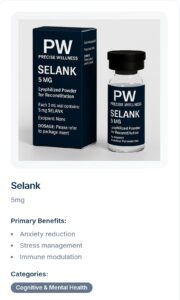
Selank is a synthetic heptapeptide that acts primarily as an anxiolytic (anxiety reducer) and nootropic (cognitive enhancer). Developed by the Institute of Molecular Genetics in Russia, it mimics the naturally occurring immune peptide tuftsin. Unlike traditional anti-anxiety medications, it provides relief without sedative side effects or risks of physical dependence.
Primary BenefitsReduces Anxiety: Modulates GABAergic pathways allosterically to calm the nervous system. Clinical trials show efficacy comparable to low-dose benzodiazepines.No Sedation: Relieves tension without
No Sedation: Relieves tension without causing drowsiness, lethargy, or cognitive dulling.
Enhances Cognition: Improves short-term memory, processing speed, and learning retention. It upregulates Brain-Derived Neurotrophic Factor (BDNF) to support neuroplasticity.Balances Mood:
Balances Mood: Stabilizes serotonin and dopamine levels in the brain. This supports better focus, motivation, and emotional resilience.Suppresses
Balances Mood: Stabilizes serotonin and dopamine levels in the brain. This supports better focus, motivation, and emotional resilience.
Suppresses Stress: Inhibits enzymes that degrade enkephalins, which are natural pain- and stress-relieving peptides. It also helps regulate cortisol spikes.
Neuroprotection: It rapidly elevates the expression of Brain-Derived Neurotrophic Factor (BDNF). BDNF is a critical compound responsible for neuroplasticity, nerve growth, and brain cell repair.
Mood Stabilization: It influences the synthesis, sensitivity, and reuptake of dopamine and serotonin. This dual regulation aids in managing symptoms of depression, lack of motivation, and emotional burnout.
Immune Support: Because it is a structural analog to the immunomodulatory peptide tuftsin, it regulates inflammatory cytokines (like IL-6) and stimulates interferons to bolster immune defense against infections.Substance Withdrawal Relief: Clinical and anecdotal evidence suggests it can assist individuals tapering off benzodiazepines, opioids, or recovering from chronic alcohol use by easing neuro-dysregulation and severe withdrawal anxiety.Mechanisms of Action

Ovagen is a short, synthetic tripeptide bioregulator (consisting of the amino acid sequence Glutamic Acid-Aspartic Acid-Leucine or Glu-Asp-Leu) primarily developed to target and normalize the functions of the liver and gastrointestinal tract. Based on cellular signaling models and Russian bioregulator research, its primary benefits center around metabolic regulation and tissue support.
Liver Function Normalization: Reduces peptide deficiencies within hepatic tissue to stabilize metabolic processes.
Protein Synthesis Restoration: Helps reactivate and restore optimal protein synthesis directly inside liver cells.
Gastrointestinal Support: Positively interacts with GI targeting pathways to aid in overall digestive organ bioregulation.
Hormonal and Endocrine Signaling: Investigated for its ability to support reproductive tissue signaling networks and ovarian cellular maintenance.
Cellular Resilience: Promotes cellular communication and tissue stability to help liver and endocrine systems resist toxic or age-related decline.
Detoxification Support: Used as an adjunct to assist the liver during metabolic stress or after exposure to toxins.
Age-Management Protocols: Integrated into longevity research to preserve organ function and counter tissue degradation.
Complementary Therapy: Easily combined with conventional medical treatments and other dietary supplements without standard negative drug interactions.

PNC-27 is an experimental anti-cancer peptide designed to selectively target and destroy cancerous cells while sparing healthy tissue. It consists of a specific p53 tumor-suppressor protein segment attached to a cell-penetrating “leader” sequence.
While it has shown remarkable results in laboratory and animal studies, it is critical to note that PNC-27 is not approved by the FDA or SAHPRA for commercial human use, and much of the evidence remains preclinical.
1. Selective Destruction of Cancer CellsThe primary benefit of PNC-27 is its ability to kill cancer cells via necrosis (rapid cell death) without affecting normal, untransformed cells.
Targeted Binding: It specifically binds to HDM-2 (human double minute 2), a protein abnormally expressed on the outer cell membranes of many types of cancer cells.
Pore Formation: Upon binding, the peptide punctures the membrane, creating transmembrane pores.
Preclinical laboratory testing and animal models indicate that PNC-27 is highly versatile and effective against a diverse array of solid and non-solid malignant cell lines. Documented impact includes:
Solid Tumors: Promising cytotoxic activity against pancreatic cancer, breast cancer, cervical cancer, and melanoma.
Hematopoietic Tumors: Effective in destroying leukemia cell lines (such as K562 cells) and showing potential for treating high-risk multiple myeloma.
In healthy bodies, the p53 gene acts as a tumor suppressor by instructing damaged cells to self-destruct. However, most advanced cancers carry mutated or inactive p53 genes, allowing them to resist normal cell death. PNC-27 works via a p53-independent pathway. Because it acts mechanically by puncturing the outer cell wall, it remains fully capable of killing cancer cells even if their internal p53 genetic machinery is completely broken.
Cancer treatments often fail because tumors adapt and build a tolerance to standard drugs. Research published in PubMed literature demonstrates that PNC-27 remains highly toxic to chemotherapy-resistant human ovarian cancer cell lines. Furthermore, studies show a synergistic effect when used alongside traditional chemo agents like Paclitaxel—PNC-27 effectively destroys the aggressive cancer cells that manage to survive initial chemotherapy exposure.

Livagen is a synthetic short peptide (tetrapeptide) with the amino acid sequence Lys-Glu-Asp-Ala (KEDA). Developed primarily as a peptide bioregulator, its potential benefits stem from its ability to directly interact with DNA, influence gene expression, and modulate cellular aging pathways.
Because it consists of a very short chain of amino acids, it possesses high flexibility and specificity when interacting with cellular structures.
The primary scientifically researched benefits of Livagen include:
Chromatin Activation & Anti-AgingReversing DNA compaction: As cells age, areas of DNA become tightly packed (condensed into heterochromatin), silencing beneficial genes. Studies demonstrate that Livagen induces “de-heterochromatinization” (uncoiling) of chromatin in older individuals.
Reactivating silent genes: By unpacking the chromatin, Livagen frees up previously repressed genes, which helps restore youthful protein synthesis and cellular function.
Liver Optimization & RegenerationRestoring protein synthesis: In laboratory models of aging liver cells (hepatocytes), nanomolar concentrations of Livagen significantly boosted protein production.
Circadian rhythm reset: It helps correct and restore the intracellular biological clock of liver protein production that normally degrades with age.
Antioxidant support: The peptide exhibits protective, antioxidative qualities in models of liver pathology.
Immune System EnhancementLymphocyte activation: Livagen unpacks chromatin within white blood cells (lymphocytes).
Immune gene transcription: This activation increases the transcriptional activity of genes crucial to robust immune defense, which frequently slow down during aging.
Pain Modulation & Stress Relief
Enkephalinase inhibition: In human serum trials, Livagen was highly effective at blocking the enzymes that break down enkephalins—natural pain-relieving opioids produced by the body.
Prolonged natural pain management: By slowing down the destruction of these endogenous opioids, Livagen may assist the body in maintaining elevated stress tolerance and pain control. It was shown to be more efficient at this than notable traditional peptidase inhibitors like puromycin and leupeptin.

MOTS-c (Mitochondrial ORF of the 12S rRNA type-c) is a unique mitochondrial-derived peptide that acts as a global metabolic regulator. Because it replicates many of the cellular pathways triggered by physical activity, it is widely referred to in clinical research as an “exercise mimetic”.
The primary therapeutic benefits of MOTS-c identified in preclinical and emerging human studies include:
Activates the AMPK Pathway: MOTS-c acts as a cellular energy sensor, shifting cells toward fat oxidation and away from fat storage.
Improves Glucose Uptake: It clears sugar from the bloodstream by upregulating glucose transporter type 4 (GLUT4) in skeletal muscle tissue.
Combats Insulin Resistance: By enhancing metabolic flexibility, it mimics first-line diabetes management drugs like metformin.
Targeted Fat Loss: Rather than suppressing appetite like GLP-1 medications, MOTS-c systematically alters how the body processes energy.
Reduces Visceral Adipose Tissue: Research published by the Alzheimer’s Drug Discovery Foundation and clinics tracking body composition shows it preferentially reduces dangerous belly fat.
Muscle Preservation: It promotes fatty acid breakdown while safeguarding lean muscle mass during caloric deficits.
Boosts Endurance: Preclinical trials demonstrate a 12% to 15% increase in total running time and distance by expanding the skeletal muscle-derived MOTS-c pool.
Motor CoordinatioImprovesn: Multi-stage aging models show improved grip strength, power, and physical resilience across young and old cohorts.
WADA Regulation: Because of these powerful performance-enhancing properties, the U.S. Anti-Doping Agency (USADA) and the World Anti-Doping Agency explicitly ban its use in competitive sports.
Restores Cellular Homeostasis: Natural MOTS-c production declines steadily as humans age. Exogenous supplementation helps restore nuclear-mitochondrial signaling to combat age-related cellular stress.
Cardiovascular Support: Studies in PubMed Central indicate it protects coronary artery endothelial cell function, prevents vascular calcification, and enhances myocardial mechanical efficiency.
Bone Mineralization: It promotes the proliferation and differentiation of osteoblasts (bone-forming cells), making it a candidate for treating postmenopausal osteoporosis.
Suppresses Pro-Inflammatory Cytokines: It helps deactivate the NF-κB inflammatory pathway, which is heavily implicated in chronic diseases.
Alleviates Inflammatory Pain: Recent animal models indicate it exhibits strong antiallodynic effects, reducing hypersensitivity to pain induced by tissue inflammation.

Advanced Skin Rejuvenation and Anti-AgingGHK-Cu is considered a gold standard in dermatological aging defense. According to clinical reviews, it outperforms traditional ingredients like Vitamin C and tretinoin in boosting structural proteins.
Stimulates Collagen and Elastin: It signals fibroblasts to increase procollagen and elastin synthesis. This actions plumps the skin matrix to visibly tighten loose skin and soften fine lines.
Reduces Wrinkle Depth: In head-to-head testing tracked by researchers, it has demonstrated a distinct ability to reduce wrinkle volume and depth. It outperforms standard anti-aging formulations like Matrixyl 3000
Fades Hyperpigmentation: By modulating matrix metalloproteinases (MMPs), it aids the removal of damaged skin tissue. This process breaks down mottled pigmentation, sun spots, and melasma for a clearer skin tone.
Strengthens Skin Barrier: It repairs underlying protective barrier proteins. This helps lock in essential hydration by boosting water-retaining glycosaminoglycans.
Hair Follicle Stimulation and Scalp HealthGHK-Cu serves as a prominent active agent in advanced hair restoration protocols.Promotes
Hair Growth: Lab studies indicate it can stimulate dermal papilla cell proliferation by up to 70%. It blocks mechanisms that cause follicles to shrink, encouraging a healthier growth cycle.
Thickens Existing Hair: Users consistently document a drastic reduction in hair shedding and an increase in the thickness and size of existing hair follicles.
Calms Scalp Conditions: Its biological anti-inflammatory traits soothe irritated scalp environments, reinforcing the anchoring strength of hair roots.
Accelerated Wound Healing and Injury RecoveryThe molecule was originally discovered for its extraordinary capacity to initiate rapid tissue repair.
Speeds Post-Procedure Recovery: It is widely integrated into post-procedure care following micro-needling, chemical peels, and laser treatments to rebuild tissue rapidly.
Drives Angiogenesis: GHK-Cu promotes the formation of new blood vessels. This re-establishes optimal oxygen and nutrient delivery directly to injured sites.
Minimizes Scars: The peptide carefully balances tissue synthesis and breakdown. It leads to smoother skin remodeling and fewer prominent blemishes or acne scars
Antioxidant and Anti-Inflammatory DefenseBeyond simple cosmetics, GHK-Cu functions as a systemic shield at the cellular level.Neutralizes Free Radicals: It serves as an essential cofactor for powerful antioxidant enzymes like superoxide dismutase (SOD).
Suppresses Inflammatory Cytokines: It reduces destructive inflammatory markers (like IL-6 and TNF-alpha). This provides noticeable relief for reactive skin conditions like rosacea or chronic redness
Method of Delivery & Modern ContextTopical Formulations: Serums, creams, and oils containing GHK-Cu are widely accepted and safe for daily home use. They are highly effective for targeting surface texture, skin tone clarity, and fine lines.